STERNA
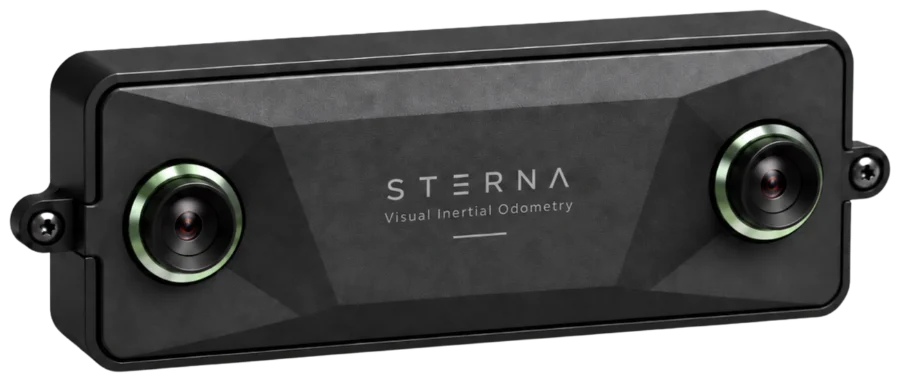
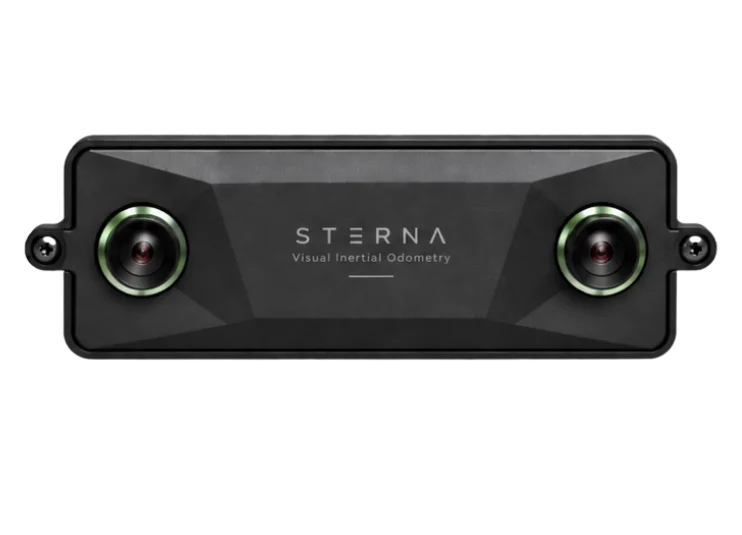
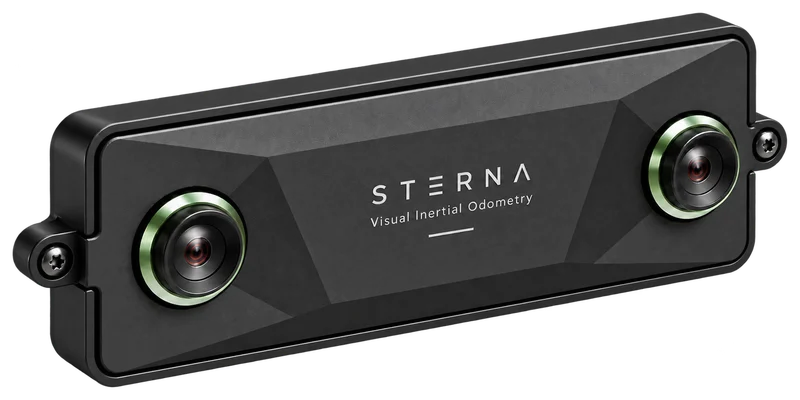
Visual-inertial positioning module for drones
Plug and play.
USB-C interface. VIO library and API supplied. Integrates into your existing UAV architecture.
GNSS-DENIED POSITIONING
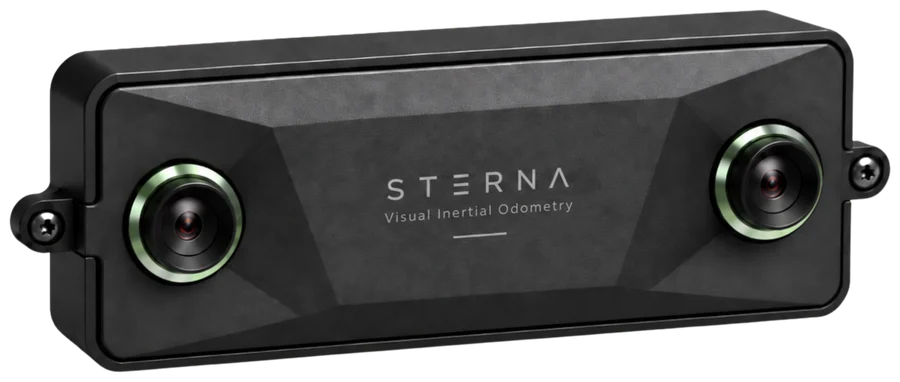
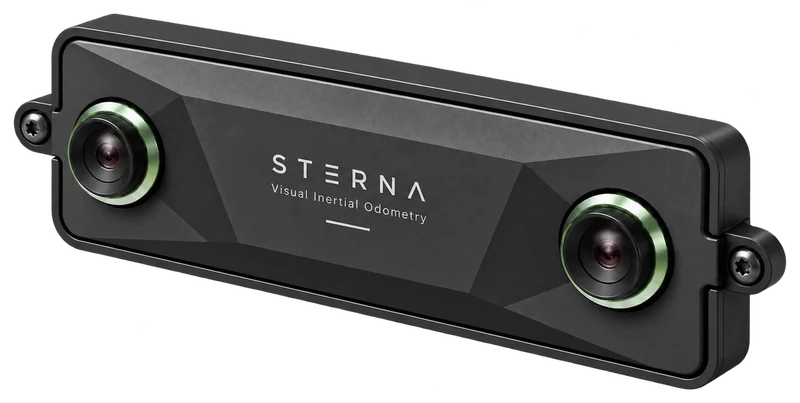
Stereo vision, low-light imaging and inertial sensing, fused on board. Position at 10 Hz, with no satellite input.
Made in Europe.
Designed and manufactured in Europe. ITAR-free. Open architecture, documented API, no vendor lock-in.
How it works
Position without GNSS
STERNA - VIO MODULE
VISUAL-INERTIAL POSITIONING
Position is updated at 10 Hz, with drift below 5% of distance travelled on the current baseline. The module runs standalone, or alongside SCOPS on the same platform.
Real-time VIO visualiser: feature tracking on the stereo pair, inertial pre-integration and the reconstructed trajectory. Stereo mode supports positioning up to 10 m AGL; mono mode extends to 150 m AGL, depending on terrain texture, lighting and operating conditions.
Can a drone fly without GNSS with STERNA?
Yes. STERNA fuses stereo vision, low-light imaging and inertial sensing on board to give a position at 10 Hz with no satellite input. When GNSS is jammed, STERNA takes over and the mission carries on.
How accurate is STERNA?
Position drift is under 5% of the distance travelled on the current baseline.
At what altitude does STERNA work?
Stereo mode supports positioning up to 10 m AGL. Mono mode extends to 150 m AGL, depending on terrain texture, lighting and operating conditions.
How does STERNA connect to my drone?
STERNA plugs in over USB-C and sends its position to the autopilot as MAVLink ODOMETRY messages. A VIO library and a documented API are supplied.
How much does STERNA cost?
Pricing is available on request. Tell us about your platform and mission.
Integrate STERNA into your UAV
Discuss your GNSS-denied positioning requirements with our team, and evaluate STERNA on your platform.